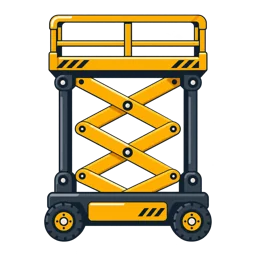
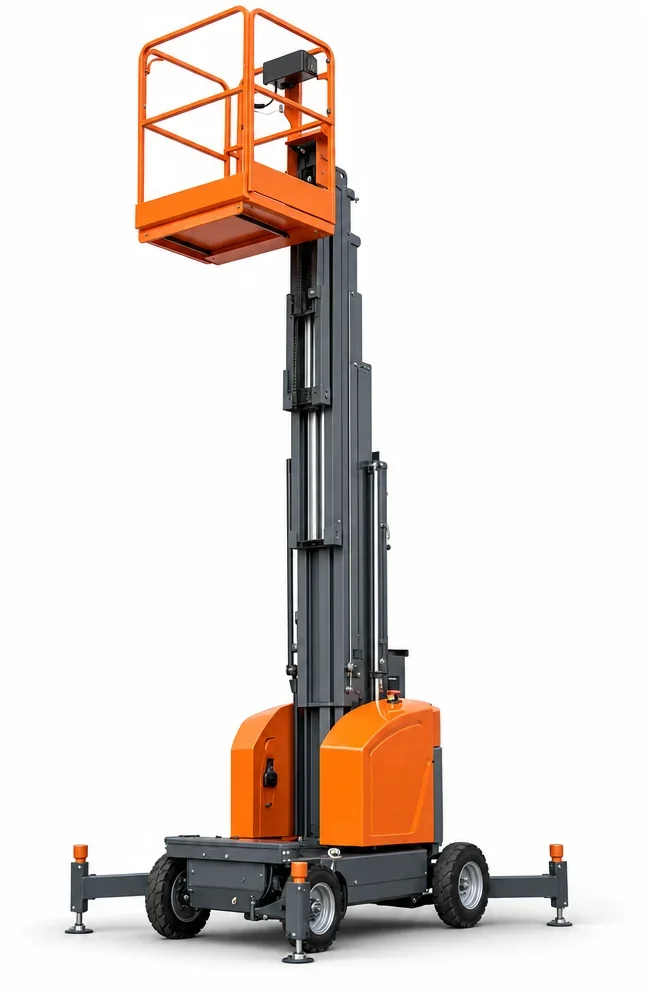
When a mast lift fits better than a scissor
- The path includes single or double doors, elevators, or narrow hallways where a typical scissor is too wide.
- Tasks involve one or two people with light tools rather than heavy materials.
Local conditions that change the choice
- Many buildings in Roanoke mix tall atriums with tight service corridors. A compact chassis and zero‑turn steering matter more than platform size.
- Winter moisture tracked indoors can make entry thresholds slick; non‑marking tires and lighter axle loads reduce floor risk along polished paths.
Key measurements before selecting a unit
- Doorway width and height, and any elevator cab dimensions if vertical transport is required.
- Working height needed for lighting, sensors, signage, or cable runs.
- Floor rating along the route and at the work zone, especially near mezzanines or raised slabs.
Planning around the work envelope
- Small platforms limit material volume; pre‑stage parts at height using other equipment if needed.
- Outreach on most mast lifts is minimal; if you must reach over railings or around obstacles, consider an articulating boom at /articulating-boom-lift-rental/.
When another platform is smarter
- Straight, vertical tasks with more deck space needs point to a slab scissor at /electric-scissor-lift-rental/.
- Exterior work on uneven ground is outside the intent of most mast lifts; rough‑terrain solutions live at /rough-terrain-scissor-lift-rental/ or /telescopic-boom-lift-rental/.
Actual site conditions, the selected unit’s instructions, and facility procedures govern elevated work.
Related planning links
- /aerial-lift-rental/
- /products/
- /contact/