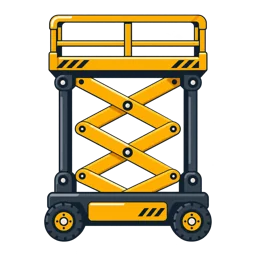
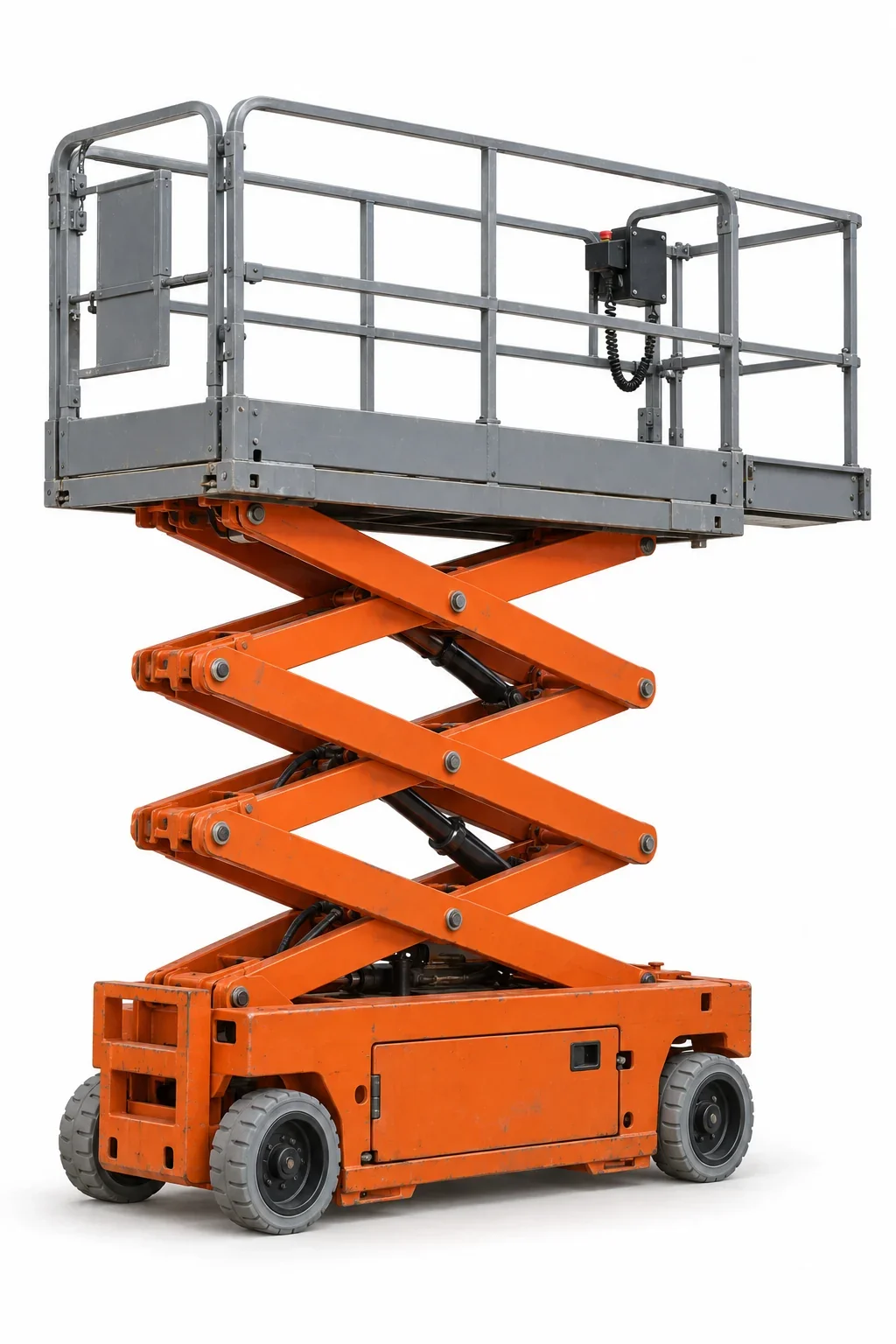
Terrain and weather first
- Grade: Identify the steepest section the lift must traverse or work on. Sloped lots and cut-and-fill areas are common around Roanoke.
- Surface condition: After rainfall or snowmelt, unfinished sites can remain soft. Rough-terrain scissors are built for traction and stability on variable soils.
- Site access: Ramps, curbs, and utility crossings require ground clearance and a stable wheelbase.
Platform height and deck space
- Height: Size the platform height to your work elevation while accounting for façade details, canopies, or roof edges.
- Platform area: Larger decks help stage exterior cladding, conduit, or signage, reducing trips across uneven ground.
- Capacity: Combine worker count, materials, and tools—especially on projects staging heavier items outdoors.
When a rough-terrain scissor is ideal
- Envelope work where the platform can sit below the elevation line of windows, panels, or soffits.
- Multiple work bays spread across a sloped, unfinished pad where travel over variable ground is required.
When to consider a boom
If the lift must clear over awnings, landscape features, or equipment pads, straight vertical travel may not reach the target. See /boom-lift-rental/ or compare at /aerial-lift-rental/.
Coordination with interior segments
Some Roanoke projects pair an outdoor rough-terrain unit with an indoor electric slab scissor for punch lists. For interior zones, review /electric-scissor-lift-rental/.
Actual conditions, the selected unit’s instructions, and site procedures govern any exterior or elevated work in Roanoke, VA.